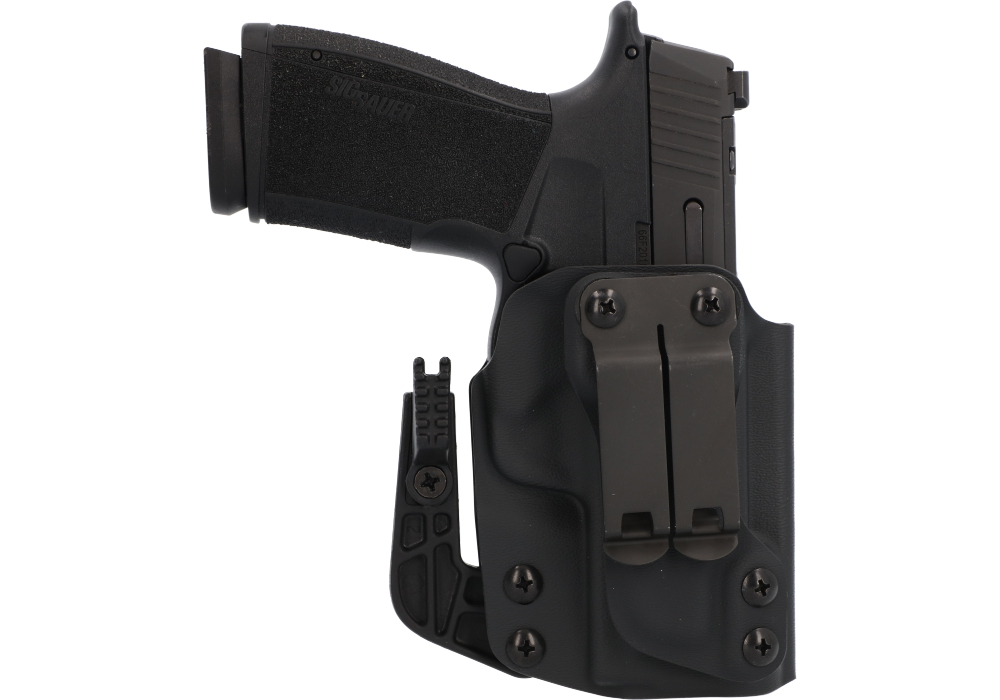
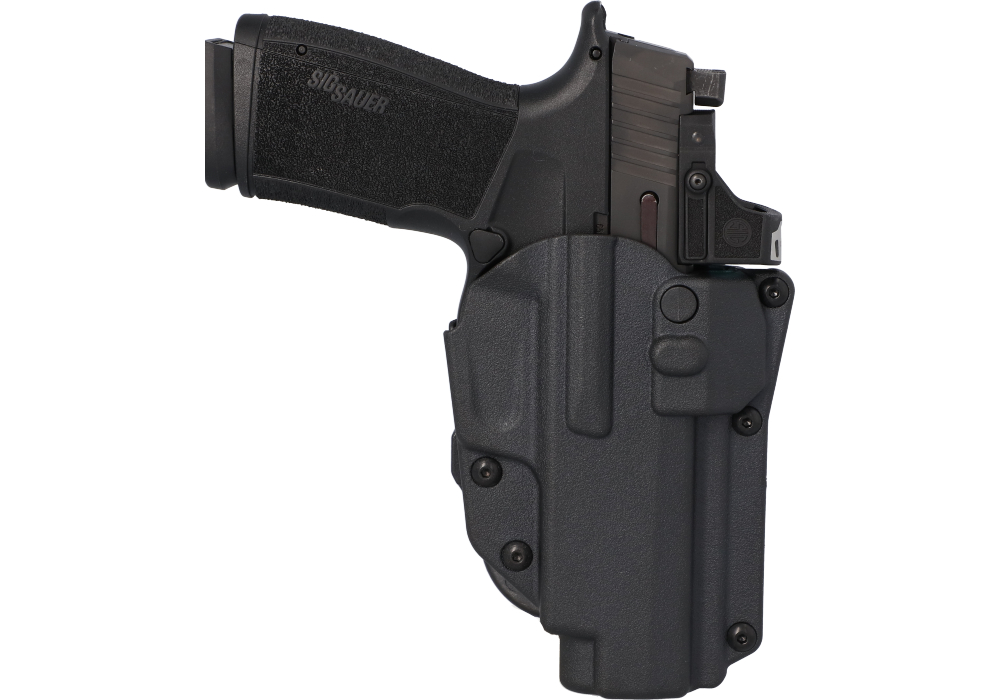
.380 ACP accessories support the everyday tasks that come with owning a pistol: carrying it securely, organizing range equipment, maintaining its condition, and storing it responsibly. Common accessory categories include holsters, magazines, grip accessories, cleaning supplies, protective cases, and compatible training aids. For owners comparing 380 ACP compact pistols, accessory fit deserves attention alongside the firearm itself. The cartridge designation identifies the chambering, not a universal accessory pattern. Two pistols chambered in .380 ACP can have different frame dimensions, magazine designs, control locations, and sight profiles, so compatibility depends on the exact firearm model and the accessory manufacturer’s specifications. A holster should match the pistol’s shape, fully cover the trigger guard, and provide secure retention without interfering with controls. Molded polymer offers a firm structure and a surface that is generally easy to wipe clean, while leather has a different feel against clothing and requires care to preserve its shape and finish. Stitching, attachment hardware, edge finishing, and the stability of belt clips or loops all deserve a close look. For lawful concealed carry, comfort involves more than softness: a stable attachment and an appropriate profile help keep the holster positioned consistently through ordinary movements such as sitting at a desk or getting into a vehicle. Inside-the-waistband, belt-mounted, and pocket designs serve different needs, and each should be used only in the manner specified by its manufacturer. Pocket carry requires a purpose-built holster and a pocket free of other objects. A compatible belt can also matter, particularly when a flexible everyday belt allows equipment to tilt or shift. Assess the complete arrangement rather than judging a holster by its size alone. Clothing, belt width, attachment style, and the pistol’s configuration all affect suitability. A low-profile design may suit one owner’s routine, while another values easier removal of the entire holstered setup for secure storage. The right match is the one that supports responsible handling, reliable retention, and comfortable use without requiring compromises in trigger protection or fit.
Magazines and grip accessories require equally careful matching because a small difference in dimensions can affect whether a component belongs on a particular pistol. Magazine compatibility should be confirmed through manufacturer documentation rather than appearance, cartridge designation, or a general description such as “compact.” Body shape, the locking interface, and the base configuration vary between firearm designs. Steel and polymer magazine bodies have different construction characteristics, but material alone does not establish suitability or service life; dimensional consistency, overall condition, and verified compatibility are more useful considerations. Keep magazines protected from grit and inspect them according to the manufacturer’s recommendations, especially when they move frequently between a range bag, storage case, and magazine pouch. A pouch should hold the intended magazine securely without crushing it or allowing loose debris to collect around it. Grip extensions and replacement grip panels may alter how a small frame feels in the hand, but they also change its exterior dimensions. That matters when evaluating an existing holster, a fitted case, or the space occupied by the complete setup. A longer gripping surface can feel more comfortable to some owners, while others prefer a shorter profile; hand size and personal comfort vary too much for a single shape to suit everyone. Texture deserves similar attention. A pronounced surface can feel secure during supervised practice yet rub against clothing, while a smoother finish may feel better against the body. Any grip accessory must leave controls unobstructed and be approved for the specific firearm. Components requiring fitting or internal work belong with a qualified professional rather than an improvised installation. Beyond firearm-specific accessories, range equipment helps keep practice organized. Protective eyewear, appropriate hearing protection, and durable bags with separate compartments serve new owners and experienced range visitors alike. Compartments that distinguish magazines, maintenance supplies, and personal belongings make it easier to keep track of equipment without leaving small parts loose at the bottom of a bag. Reinforced handles, dependable closures, and accessible pockets are useful details when equipment is packed, unpacked, and carried regularly.
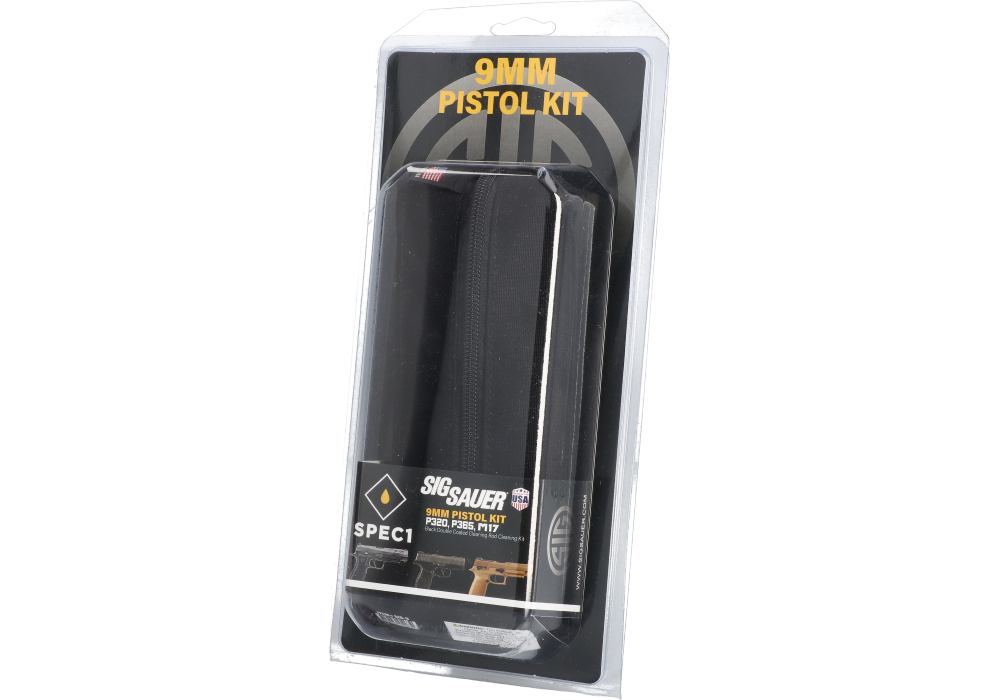
Care and storage accessories help protect a .380 ACP pistol and its supporting equipment between uses. Cleaning tools should be suitable for the firearm’s bore and finish, with brushes, patches, and other supplies selected according to its manufacturer’s instructions. Compatibility matters here as well: a cleaning chemical appropriate for one surface may not be suitable for another, particularly where polymer, coated metal, leather, or adhesives are involved. Follow the recommended maintenance schedule and handling precautions, with the firearm unloaded and ammunition kept separate from the cleaning area. A dedicated mat can protect a work surface and help keep small components visible, while a compact organizer prevents brushes and supplies from becoming scattered through a range bag. Holsters and pouches need care of their own. Inspect attachment points and closures, remove debris using the recommended method, and replace equipment that no longer retains its intended shape or performs its protective role. Leather should receive only treatments appropriate to its finish; excessive conditioning can affect structure. Protective cases can limit abrasion during transport, but padding alone does not provide secure storage. Lockable storage should suit the firearm, prevent unauthorized access, and comply with applicable requirements. A soft pouch or transport case is not a substitute for an appropriate security solution, particularly in a household with children or visitors. Avoid leaving equipment in contact with trapped moisture, and check stored accessories periodically for corrosion, loose hardware, or deteriorating liners. Clearly identifiable inert training aids may support supervised instruction or manufacturer-approved practice, but they must be compatible with the firearm and kept distinct from live ammunition. For a new owner, an organized care kit or protective storage accessory can be a thoughtful gift once compatibility and personal preferences are confirmed. Experienced owners may appreciate equipment that fits an established routine rather than something that changes their setup. Whether the purpose is range use, lawful carry, or responsible storage, useful .380 ACP accessories earn their place through sound fit, durable materials, straightforward care, and suitability for the way the owner actually uses and maintains the firearm.