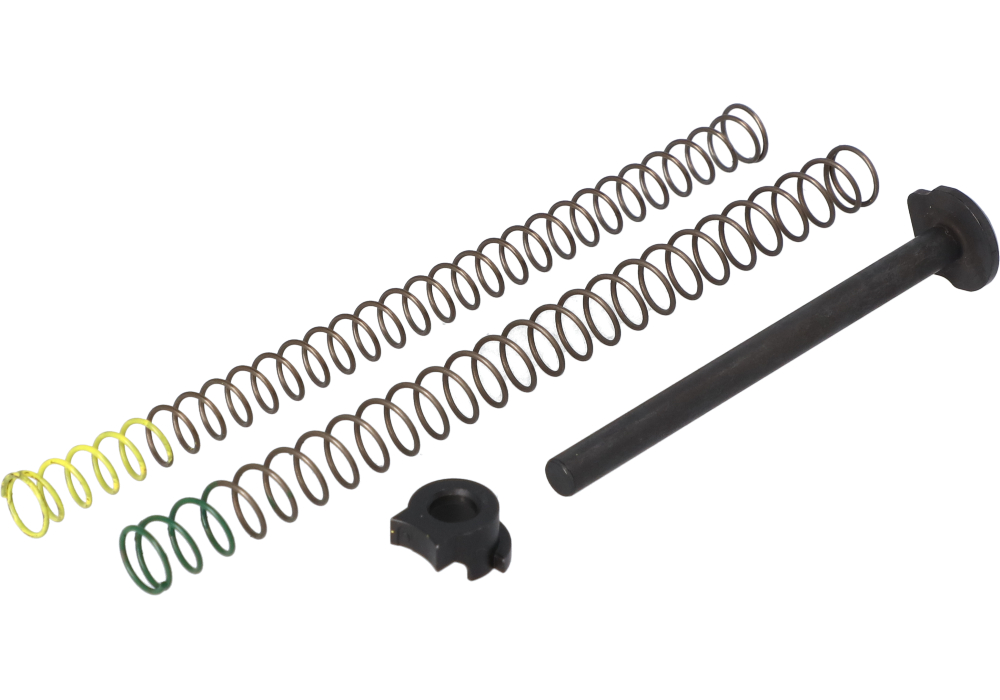
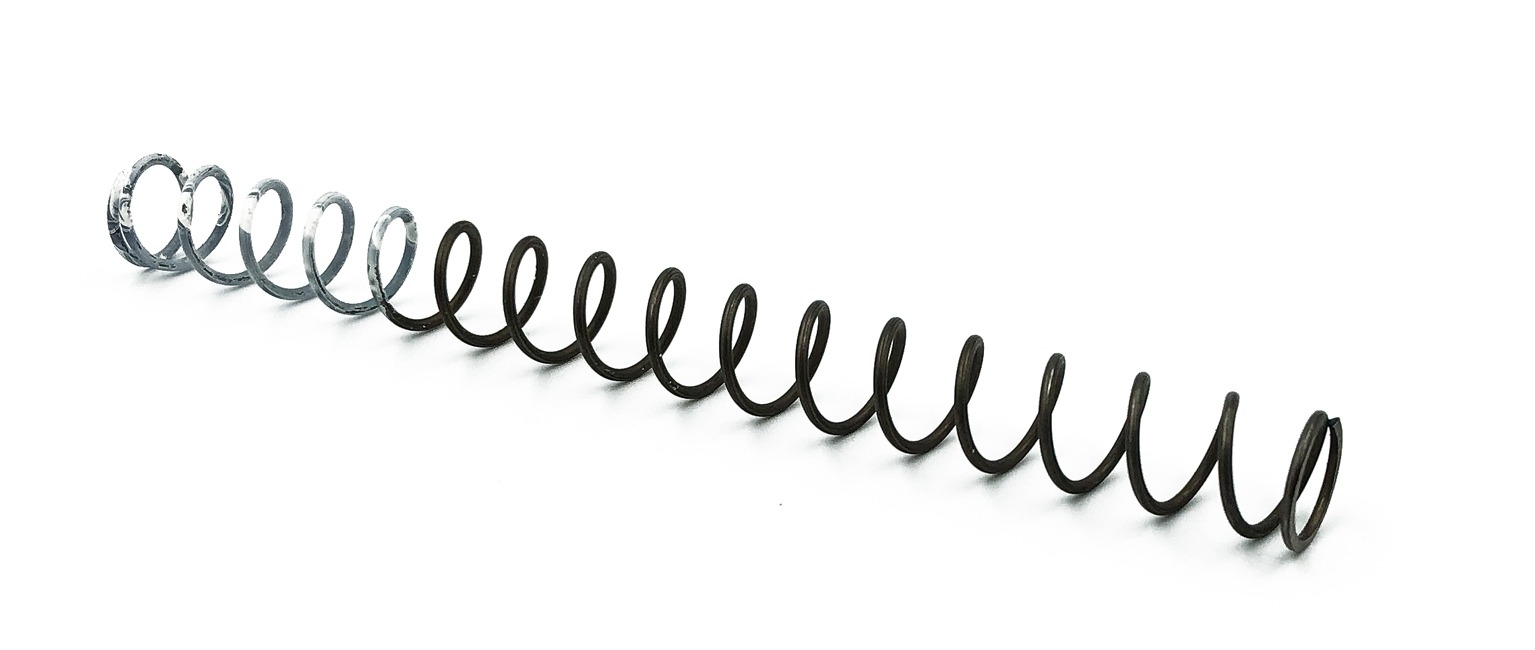
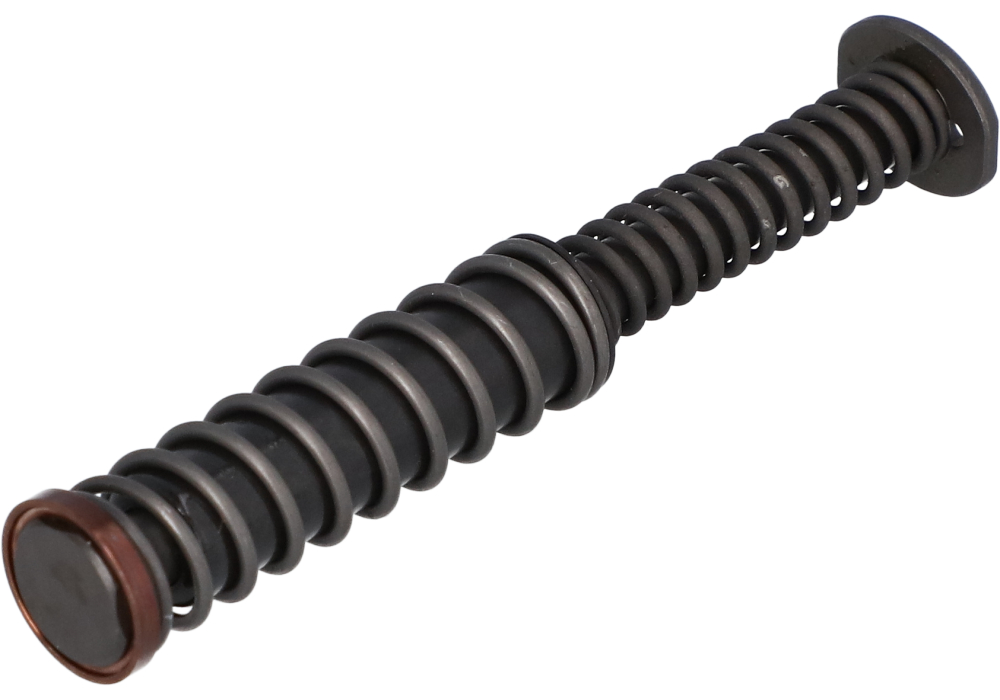
Firearm tuning springs are replacement spring components associated with a firearm’s recoil system, firing mechanism, or trigger assembly. Depending on the firearm’s design, this category can include recoil springs, hammer springs, striker springs, and other small springs that serve distinct mechanical roles. Although these components may look similar, their functions and fit requirements are not interchangeable. A recoil spring participates in the movement and return of a reciprocating assembly, while a hammer or striker spring supplies force within the firing mechanism. Springs associated with the trigger assembly have separate responsibilities defined by that mechanism’s design. Changing a spring can affect how a firearm functions, so the term “tuning” should not suggest that every replacement is an upgrade or that a different spring will resolve an unexplained malfunction. For many owners, the relevant purchase is a correctly specified replacement for a worn component, selected to preserve the firearm’s intended operation. Others may be comparing components for a firearm used in organized competition, where equipment rules and manufacturer guidance remain important considerations. The essential distinction is between a component that physically fits and one that is appropriate for the complete firearm configuration. Model, generation, assembly design, and manufacturer specifications all matter. Even firearms within the same family may use different spring arrangements, and appearance alone is not a reliable compatibility check. Shoppers exploring a particular platform can find a more focused category through P320 Tuning Springs, while still confirming the application stated for each component. Across the broader category, clear fit information is more useful than broad promises about feel or performance. A spring is one part of an interconnected mechanical system, and its suitability depends on that system rather than on a single advertised characteristic. Responsible selection centers on documented compatibility, dependable function, and the intended role of the firearm.
Spring materials and construction deserve attention because these small components repeatedly flex under load. Common spring materials include carbon spring steel and stainless steel alloys, with the exact material and treatment depending on the component’s purpose. Wire diameter, coil geometry, end shape, and overall dimensions contribute to how a spring fits and behaves within its assigned assembly. Surface treatments may help protect against corrosion or wear, but no finish eliminates the need for appropriate care. A dark finish does not, by itself, establish material quality, and a bright surface does not identify a particular alloy. Product descriptions and manufacturer documentation provide a better basis for comparison than color or appearance. Likewise, a spring’s free length alone does not establish its suitability; two components that look nearly identical on a bench can have different specifications. Where a spring is supplied as part of a complete assembly, the relationship between its components is also important. Retainers, guides, and other associated parts may be specific to that assembly rather than broadly interchangeable. Durability involves more than resistance to visible damage. Repeated use, corrosion, improper handling, and contact with damaged mating surfaces can affect service life, sometimes without an obvious external sign. Manufacturer maintenance intervals and inspection recommendations offer a more dependable reference than a universal replacement schedule. During routine care, cleanliness matters because fouling and residue can obscure a component’s condition or interfere with the surrounding mechanism. Cleaning products and lubricants should be appropriate for the firearm and used as its documentation directs; more lubricant is not automatically better. Springs also benefit from organized storage that preserves their identification and keeps loose components from becoming mixed together. Original packaging or clearly labeled compartments can help distinguish similar parts. For an owner returning to a maintenance project after several weeks, that simple organization can prevent uncertainty about which component belongs to which assembly. Components showing corrosion, distortion, or other damage warrant professional assessment rather than improvised repair.
Intended use provides context for choosing firearm tuning springs, but it does not replace compatibility requirements. A recreational shooter maintaining a frequently used range firearm may be focused on replacing a service component at the recommended interval. A competitor may need documentation that supports both the firearm’s configuration and the rules of a particular discipline. An instructor responsible for training equipment may place special value on consistent maintenance records and clearly identified replacement parts. Across these situations, the common priority is a firearm that functions as intended, not a collection of components selected in isolation. A change in operating feel should never be treated as proof of reliable or safe operation. Unexplained cycling problems, inconsistent ignition, or changes in trigger behavior call for evaluation by a qualified gunsmith rather than an assumption that a different spring is the answer. This is especially important for firearms assigned to personal protection or professional duties, where adherence to manufacturer requirements carries particular weight. Spring changes can affect multiple aspects of operation, including functions that are not apparent during casual handling. Appropriate inspection and any required function verification belong within the manufacturer’s procedures and qualified professional oversight. For shoppers, useful comparison details include the exact application, whether a component is a standalone spring or part of an assembly, the supplied identification, and any stated installation requirements. Keeping that information with the firearm’s maintenance records can make future service more straightforward. As gifts, replacement springs are best suited to recipients whose exact equipment and preferences are already known; visual similarity or a general interest in firearms is not enough to establish the right fit. A knowledgeable recipient may appreciate a precisely specified maintenance component, but an uncertain match creates an unnecessary complication. Thoughtful selection ultimately favors clear documentation, appropriate materials, careful upkeep, and professional support when needed. Those qualities give firearm tuning springs their practical value as specialized components within a complete, carefully maintained firearm.