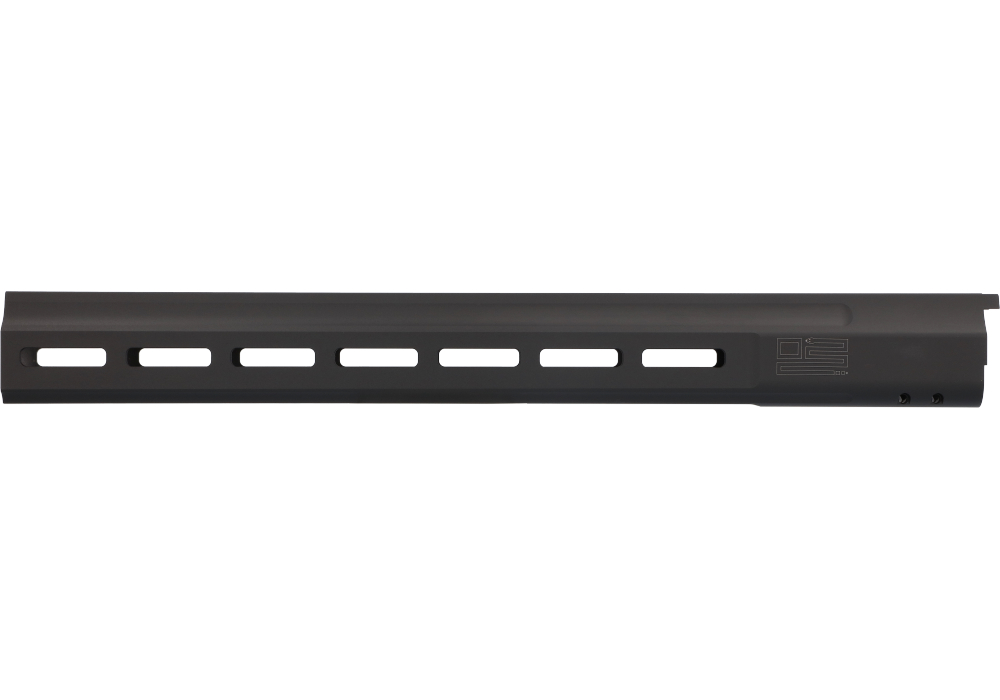
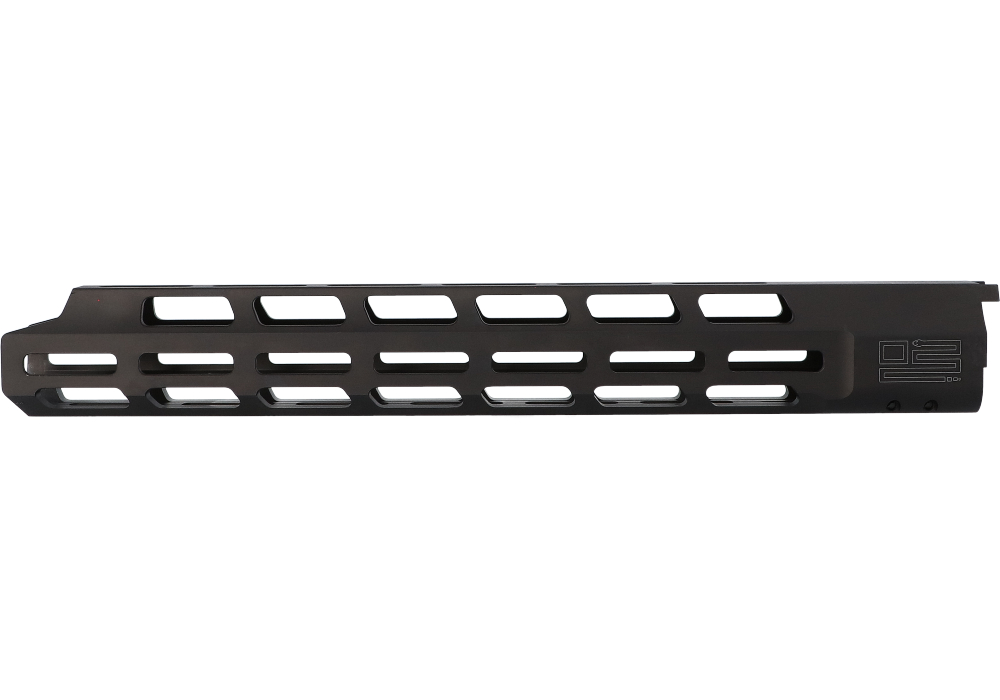
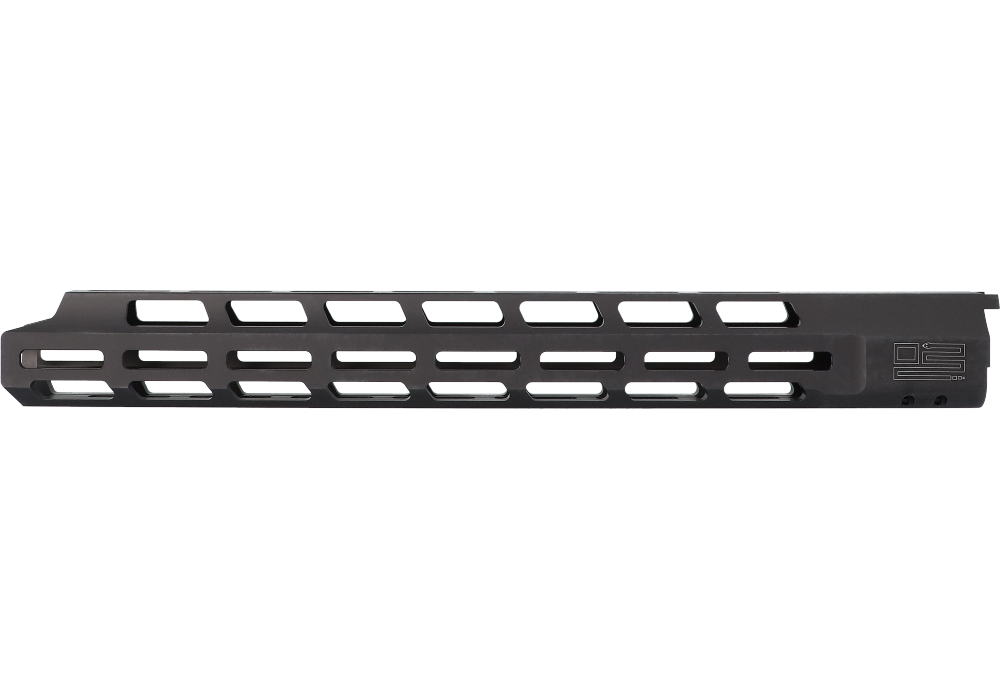
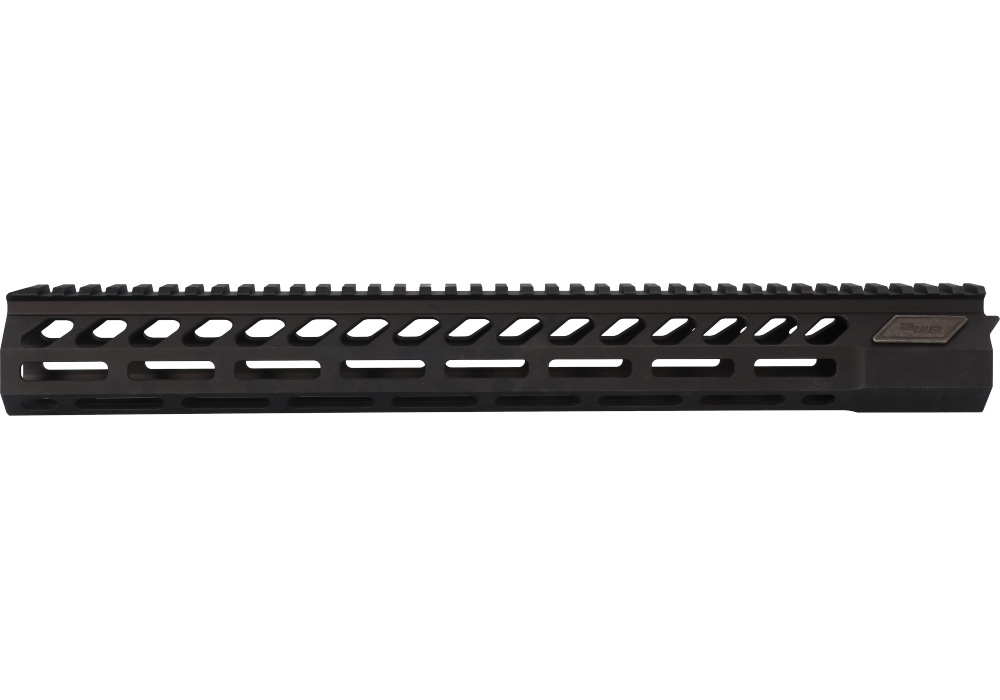
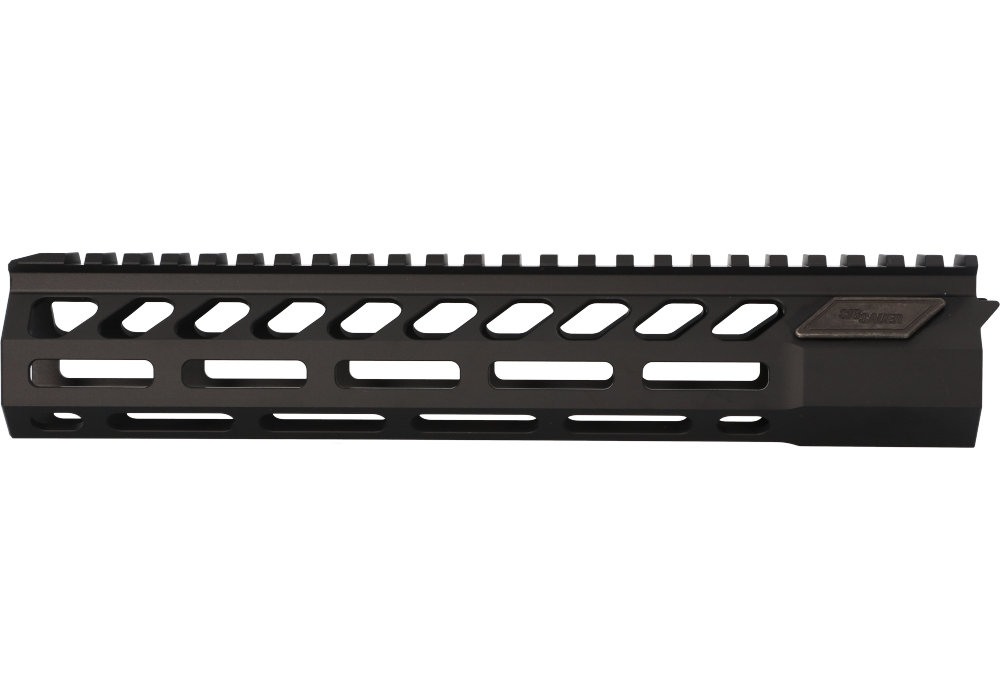
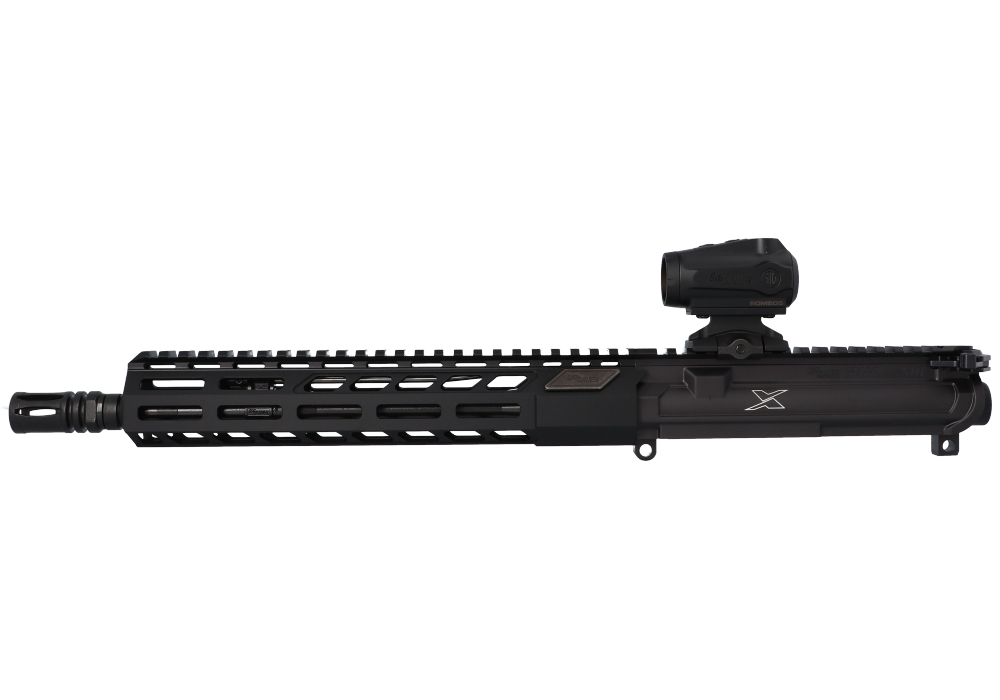
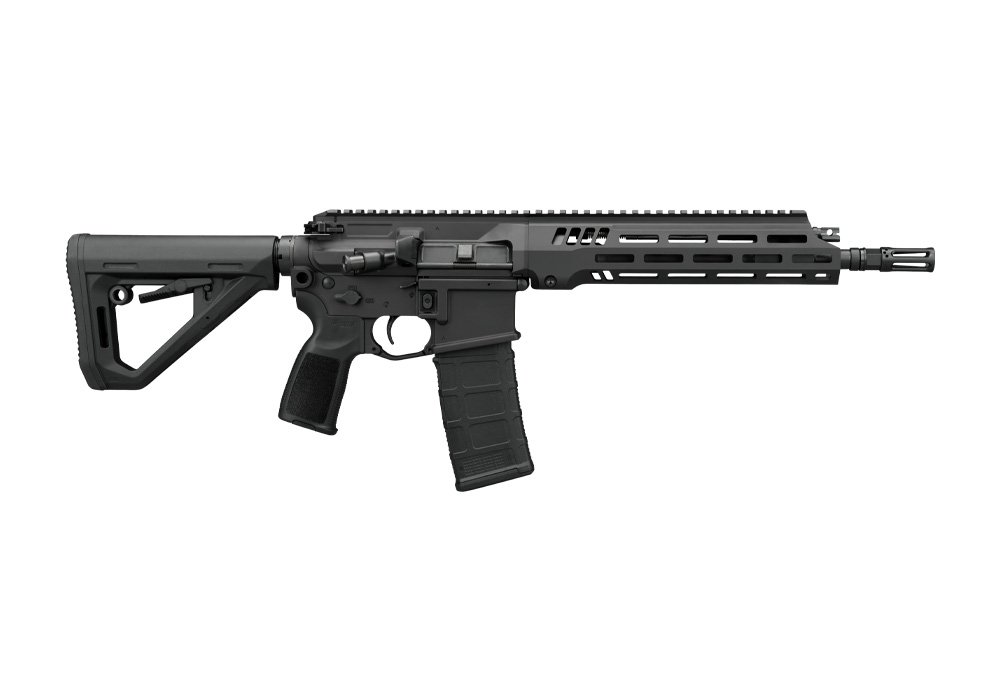
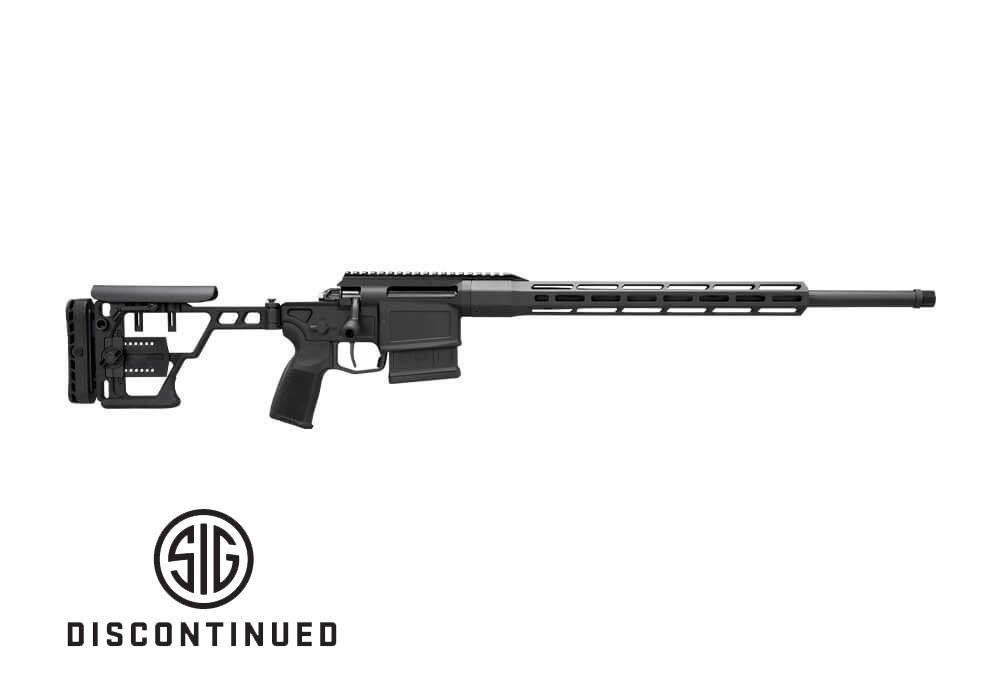
A free-float handguard is a firearm fore-end that attaches at the receiver, typically through a compatible barrel nut, without contacting the barrel along its length. This arrangement helps isolate the barrel from pressure applied to the handguard by a supporting hand, sling, or shooting rest. That separation can support more consistent shooting, although accuracy still depends on the barrel, ammunition, firearm condition, and shooter technique. For someone practicing from a bench or resting the fore-end against a supported position, the benefit is straightforward: the handguard provides a place to hold or support the firearm without placing that pressure directly against the barrel. Free-float handguards also provide space for compatible accessories while shaping how the firearm feels in the hands. A slim profile can feel comfortable for a shooter who prefers a close grip around the fore-end, while a broader profile may suit someone who wants more surface area against a rest. Length affects usable gripping space, accessory placement, and overall balance, so the longest option is not automatically the best fit. A shorter fore-end can keep weight closer to the receiver, while a longer design can provide additional room for a forward support-hand position. Target shooters, recreational range users, and people attending supervised training may value these characteristics differently, depending on how they handle and support their firearm. Exterior details matter as well. Rounded edges, thoughtfully positioned mounting slots, and a comfortable underside can make repeated handling more pleasant than an angular profile with unused exposed rails. The practical appeal of a free-float design comes from this combination of barrel clearance, secure attachment, and usable handling surfaces. Its value is not simply a different appearance, but a fore-end whose dimensions and construction suit the firearm and the way its owner actually uses it.
Materials and construction influence weight, rigidity, surface feel, and long-term durability. Aluminum is common because it can provide a useful balance of strength and relatively low weight, with protective finishes that help resist corrosion and routine surface wear. Carbon-fiber designs offer a different construction approach and can appeal to shooters who place particular importance on reducing weight. Neither material alone determines quality; wall thickness, attachment design, machining, reinforcement, and overall geometry all contribute to how a handguard performs. Large ventilation openings can reduce weight and provide airflow, but their shape and placement also affect gripping comfort and the amount of uninterrupted surface available for accessories. A narrow outside profile does not necessarily mean generous internal clearance, and two handguards of similar length can feel noticeably different once attached to otherwise comparable firearms. Fit therefore deserves more attention than appearance. Free-float handguards are not universally interchangeable, even when they look similar or are intended for broadly similar rifle platforms. Compatibility can depend on the upper receiver, barrel nut, attachment hardware, gas-system arrangement, barrel profile, and nearby components. Internal dimensions must accommodate the relevant parts without unintended contact, and the front of the handguard must have appropriate clearance around the firearm’s muzzle configuration. Top-rail alignment and accessory-interface specifications also matter when other components will share that mounting space. A continuous top rail offers a different layout from a smooth upper surface with shorter rail sections, while modular side and underside interfaces allow compatible accessories to occupy selected positions rather than covering the entire fore-end. Published dimensions and the firearm manufacturer’s compatibility information are more dependable than visual estimates. Where fit is uncertain, a qualified gunsmith can assess the complete configuration and confirm that the attachment system is appropriate. A secure, correctly matched assembly matters more than a particular silhouette, especially for a firearm that sees regular range use, frequent transport, or repeated handling during instruction.
Everyday handling often reveals the differences that specifications cannot fully describe. A handguard that feels light by itself may still shift the balance forward once accessories are attached, while a slightly heavier design may feel steady and comfortable when supported on a bench. Mounting space is most useful when it serves a clear purpose; leaving unused surfaces uncluttered can preserve a comfortable grip and simplify routine cleaning. Sling attachment locations deserve similar consideration because their position affects how the firearm hangs and how easily the shooter can move between carrying and supported handling. Durability includes more than resistance to visible scratches. A dependable fore-end should retain a secure fit, protect its attachment points through normal use, and maintain the intended clearance around the barrel and related components. Protective finishes can show cosmetic wear at frequently handled edges without necessarily indicating a structural problem, but looseness, cracks, distortion, or newly developed contact with surrounding parts warrant professional assessment before further use. Routine care generally centers on removing dust and residue with suitable cleaning materials, keeping mounting interfaces clear, and inspecting the assembly according to the manufacturer’s recommendations. Aggressive abrasives or incompatible chemicals can damage finishes, and cleaning products should be appropriate for every material they may contact. For an enthusiast receiving a handguard as a gift, confirmed compatibility and known preferences are far more useful than guessing at length or styling. Someone who enjoys deliberate bench practice may appreciate a different profile from a shooter who prioritizes easy handling during a full range session. Related options in New Handguards can be considered through the same practical priorities: appropriate fit, comfortable dimensions, suitable mounting interfaces, and construction that matches the intended use. A well-matched free-float handguard brings those details together without asking the owner to work around unnecessary bulk, awkward surfaces, or uncertain compatibility. The result is a fore-end that feels like a coherent part of the firearm rather than an accessory chosen on appearance alone.