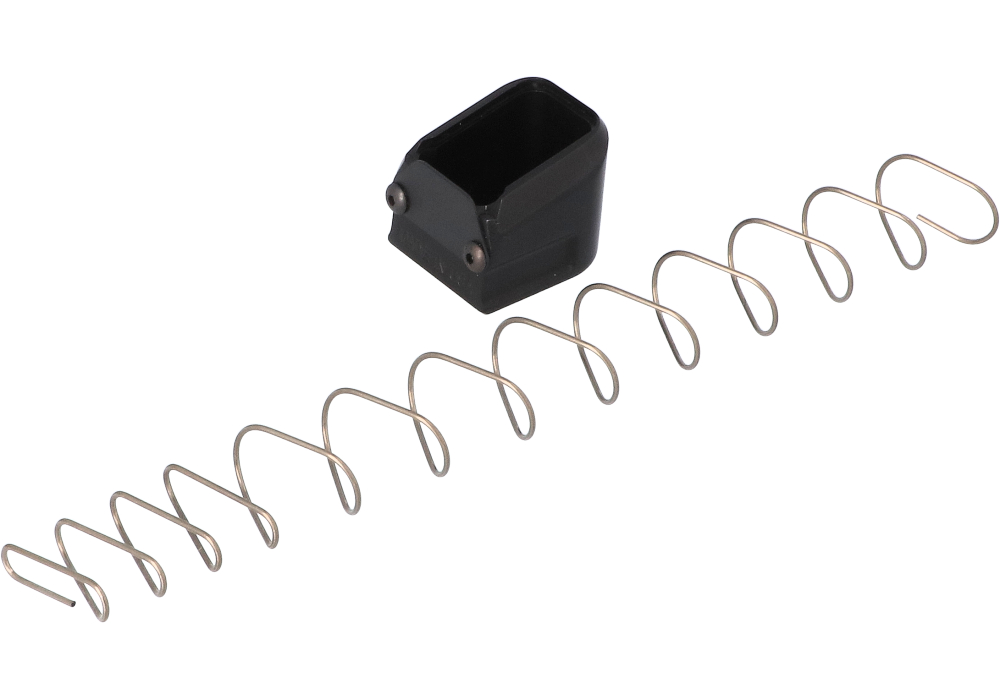
Pistol magazine extensions are accessories fitted to the bottom of compatible handgun magazines to provide additional grip surface, room for more rounds, or both. Their purpose depends on the design: a finger-rest extension may improve hand placement without changing the number of cartridges a magazine holds, while another configuration may provide additional space inside the magazine body. That distinction matters when comparing extensions that look similar in photographs but serve different needs. On a compact handgun, a slightly longer base can give the little finger a defined resting place instead of leaving it beneath the grip. On a pistol used for recreational shooting or organized competition, a broader base may offer a more substantial surface for handling the magazine. Neither feature guarantees better shooting; the value comes from how well the extension suits the handgun, the magazine, and the person using them. Shape is often as important as overall length. A gently curved front edge can follow the contour of the grip, while rounded corners can feel less intrusive against the palm than a sharply squared profile. Side contours, surface texture, and the transition between the extension and the grip all influence how the assembled handgun feels in the hand. A useful extension should complement that relationship rather than simply look larger or more aggressive. Shooters with larger hands may appreciate extra finger support, while those prioritizing a compact profile may prefer a more restrained shape. Hand size alone does not determine the answer, since finger placement and grip preferences vary considerably. Photographs showing the extension alongside the intended magazine and handgun can help clarify proportions that dimensions alone may not convey. For handguns chambered in 9mm, 9MM Magazine Extensions provides a more focused starting point, although caliber alone does not establish compatibility. The exact pistol configuration, magazine design, and extension specifications remain the meaningful details behind a suitable match.
Fit deserves close attention because magazines within the same general handgun family can differ in body length, base geometry, and internal construction. An extension intended for one magazine configuration should not be assumed to fit another simply because the cartridges are the same size or the base appears similar. Manufacturer documentation should clearly identify the supported magazine and handgun combinations, along with any components required for the intended configuration. A grip-only extension and an extension that accommodates additional rounds may have different requirements, so appearance is not a reliable substitute for those details. Materials also shape the experience of ownership. Aluminum extensions can provide a rigid, substantial feel and a precisely defined profile, while polymer designs can offer lower weight and contours that blend naturally with a polymer grip frame. Neither material is automatically the better choice for every application. Construction quality, attachment design, finish, and compatibility matter more than a material name considered in isolation. Smooth machining and clean molding are worth attention, particularly around edges that contact the hand or sit against the magazine body. A textured surface can provide purchase during handling, but pronounced ridges may feel abrasive against skin or clothing. Finishes can influence resistance to everyday surface wear, though even a durable finish may develop marks from repeated contact with magazine pouches, range benches, and other equipment. The extension’s dimensions deserve the same scrutiny as its material. Extra length can change how a handgun rests against the body, how a magazine sits in a pouch, and how much clearance exists around the bottom of the grip. A wider base may suit one pouch yet feel crowded in another. For competition use, the complete magazine’s dimensions and configuration may also need to meet event rules. These practical details are easy to overlook when attention stays on color or styling, but they often determine whether an extension feels like a useful addition or an awkward compromise.
Intended use provides a useful way to weigh those tradeoffs. A recreational shooter spending time on a range may place a premium on comfortable finger support and a base that is easy to distinguish by touch. Someone who carries a handgun lawfully may care more about modest dimensions, smooth edges, and compatibility with existing equipment. A competitor may focus on consistency across several magazines, along with the requirements of the relevant discipline. Extensions that accommodate additional rounds also require attention to applicable laws, which can vary by jurisdiction. For an experienced handgun owner, a correctly matched extension can be a thoughtful, practical gift, but the exact magazine configuration and the recipient’s preferences should be known beforehand. A familiar-looking base or a shared caliber is not enough information for that choice. Long-term care is generally a matter of following the manufacturer’s maintenance directions and paying attention to condition. Maintenance should take place with the firearm unloaded and ammunition separate from the work area. Exterior dirt, lint, and range residue can collect around seams and textured surfaces, making routine inspection worthwhile. Cleaning products should be appropriate for the extension’s material and finish; aggressive chemicals and abrasive tools can damage surfaces unnecessarily. Cracks, distortion, loose attachment, or a noticeable change in fit warrant professional assessment rather than continued use or improvised repair. Additional-round designs should be evaluated as part of the complete magazine system, not as a cosmetic accessory considered separately from function. Professional assistance is appropriate whenever compatibility or mechanical condition is uncertain. Over time, superficial scuffs may be ordinary signs of use, but a change in how securely the extension fits deserves attention. The strongest choice is not necessarily the longest or most visually prominent option. It is an extension whose proportions, materials, documented fit, and maintenance requirements align with the handgun owner’s needs, while preserving a comfortable grip and a dependable relationship between the magazine and the pistol.